Bakihara: Crafting Bold, Gothic-Inspired Brand Identities
In a crowded marketplace of sleek sans serifs and elegant scripts, sometimes a brand needs to make a statement that’s impossible to ignore. It needs a voice that’s bold, historical, and dripping with personality. That’s where Bakihara comes in. This isn’t just another font; it’s a creative asset designed for projects that demand attention and convey a sense of enduring strength.
The Visual Character: More Than Just Black Letter
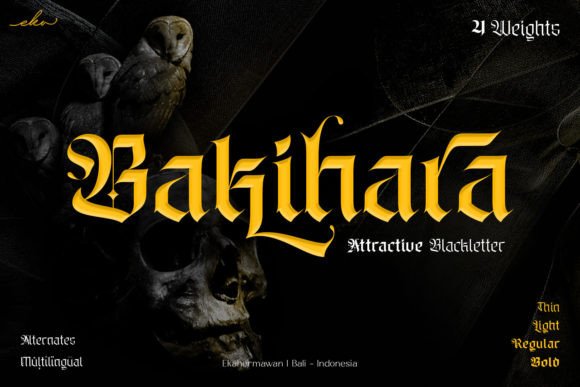
At first glance, Bakihara is unmistakably a black letter typeface, rooted in the Gothic tradition. Its letterforms are intricate, featuring the sharp, angular strokes and dense texture associated with medieval manuscripts and early printing. But to call it simply a black letter font is to miss its modern appeal. Bakihara balances that historical weight with a contemporary edge, making it feel less like a dusty relic and more like a powerful tool for today’s logo design and brand identity.
The personality of Bakihara is assertive and dramatic. It carries an inherent sense of formality, tradition, and authority, but also a hint of rebellion and artistry. This duality makes it a fascinating display font. It’s not meant for body text—its complex details would become a jumble at small sizes. Instead, it excels as a headline, a title, or a monogram where its full character can be appreciated. Think of it as the typographic equivalent of a detailed engraving or a bold tattoo: it’s meant to be seen and studied, not skimmed.
Where Bakihara Truly Shines: Strategic Applications
Knowing where to deploy a font like Bakihara is key to its success. Its strength lies in projects where visual impact and thematic resonance are paramount. For entrepreneurs and designers building a brand identity, Bakihara can be the cornerstone for businesses that want to project heritage, craftsmanship, or a distinct subcultural edge. A craft brewery, a tattoo studio, a luxury streetwear label, or an independent record store could build an entire visual world around its gothic aesthetic.
In packaging design and editorial design, Bakihara can set a powerful mood. Imagine it on the label of a premium whiskey, the cover of a fantasy novel, or the masthead of a magazine dedicated to alternative culture. Its presence immediately tells the audience something about the content’s tone and quality. For music event posters and merchandise, it’s a natural fit, evoking genres from metal and rock to electronic and hip-hop that often draw on dark, ornate imagery. Even in digital spaces, it can be used strategically for social media graphics or website headers to create a striking first impression, provided it’s used sparingly and with contrast.
Practical Guidance: Working with a Gothic Typeface
Integrating a specialized creative font like Bakihara into your workflow requires thoughtful execution. The most critical factor is font pairing. Because Bakihara is so visually dense and distinctive, it demands a partner that provides balance and readability. A clean, simple sans serif font or a neutral serif font for secondary text is almost always the right choice. This creates a clear visual hierarchy, where Bakihara commands attention for headlines, and the supporting type ensures your message is easily digestible. Avoid pairing it with other ornate script fonts or handwritten fonts, as this will result in visual chaos.
Before committing, always test the font in context. Does its x-height and spacing work with your layout? How does it look in the specific colors of your brand palette? Review the included character set—does it have the punctuation and numerals you need? For any commercial project, verifying the licensing is non-negotiable. Ensure the premium font license covers your intended use, whether it’s for a client’s logo, merchandise for sale, or a national advertising campaign. A reputable foundry will provide clear terms.
Ultimately, Bakihara is a specialized tool in your design assets toolkit. It’s not the font you use for every project, but when the brief calls for gravitas, drama, and a touch of the timeless, it can elevate your work from ordinary to unforgettable. Its power lies in its specificity—use it wisely, and it will help you build brands and projects that resonate deeply with their intended audience.